
Build · 2023-06-25
Custom high-temperature thermoacoustic engine (final design)
Can a thermoacoustic engine be built rugged enough to sit in a campfire or on a wood stove and still generate electricity?
Yes. A single-piece 304 stainless engine with a water jacket ran on a blowtorch at 30–34 V open-circuit (45 V peak observed). Power under a real load is the open measurement.
- Kind
- Build
- Status
- Built
- Date
- 2023-06-25
- Body
- 304 stainless, one piece
- Tube
- 2 in sanitary, water-jacketed cold end
- Stack
- Ceramic honeycomb, silicone-packed
- Moving parts
- Diaphragm only
- Magnet
- 25 × 5 mm NdFeB
- Speed
- ~2,000 cycles/min
- Hot / cold
- ~212 °F / ~105 °F
- Output (open-circuit)
- 30–34 V, 45 V peak
Video
What it is
The frozen design of the LES thermoacoustic engine: one welded stainless body, a ceramic stack, a water-jacketed cold end, and a high-temperature silicone diaphragm driving a linear alternator. Built for campfires and stoves rather than candles.
Results
- →Runs continuously on a blowtorch; designed for circumferential heat (fire, stove) where it runs faster.
- →Open-circuit voltage 30–34 V, 45 V highest seen.
- →Clamp-meter current read 1.1–1.9 A, but with no load connected; a resistive-load test is needed to state watts.
Lab notes
Architecture
Heat at the base drives a temperature gradient across the stack; gas parcels expand on the hot side and contract on the cold side, sustaining a standing acoustic wave (the Hofler-tube effect). The wave moves a silicone diaphragm carrying a neodymium magnet through a coil. The only moving part is the diaphragm.
The stack
The regenerator is a ceramic honeycomb monolith. The stack itself is sold on Etsy as a finished part (the High-Performance Ceramic Stack), sized for a 2 in engine. It sits in the water-jacketed section of the tube, so the jacket pins its cold end at coolant temperature while the burner drives the other end hot. Thousands of parallel channels put a large wall area in contact with the gas, and the thin cordierite walls carry little heat axially, so the gradient stays steep along the stack: that gradient is what pumps energy into the acoustic wave. The stack is a slip fit, and the gap is filled with high-temperature silicone: the stainless tube grows with heat and the cordierite barely moves, so a rigid fit would crack the ceramic on the first hot cycle. The silicone takes up the difference and seals the bypass so gas goes through the channels, not around them.
Engine body drawing
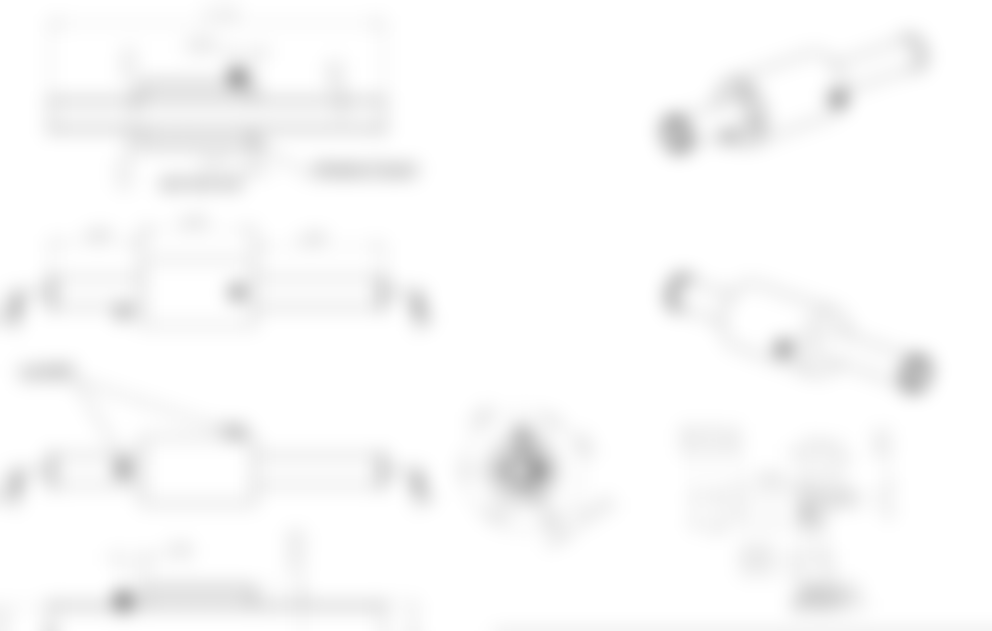 Full drawing on EtsyDimensioned PDF, ready to send to a shop →
Alternator spool drawing
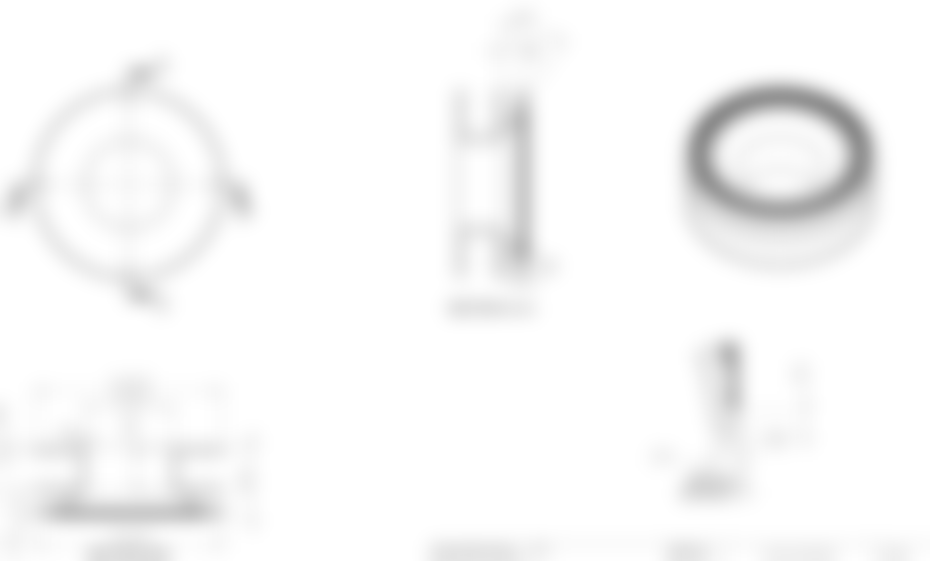 Full drawing on EtsyDimensioned PDF, ready to send to a shop →
Pressure management
Heating expands the air and would push the diaphragm off-center. A small duckbill valve at the end of a short tube vents excess air on warm-up but lets none back in, so the engine settles at a slight vacuum with roughly 1 in³ of air shuttling in and out of the vent tube each cycle. The tube matters: air reaching it cools, contracts, and is drawn back, mimicking the cycle. This replaced the water-tube check valve, which pulled water into the engine on cool-down.
Materials that failed
Latex and thermoplastic diaphragms all softened or tore under sustained heat. Custom high-temperature silicone diaphragms were the first to keep running until physically damaged.
Modularity
Every interface is a sanitary tri-clamp fitting, so alternators stack (two in series for voltage, parallel for current) and the engine can clamp directly onto a stove port or burn barrel.
Open question
- Watts under load: sweep a resistive load from ~2 Ω to 20 Ω across the coil, read voltage at each step, compute V²/R. Peak power lands near the coil's own resistance. Several viewers asked for exactly this.
Next test: piston in place of the diaphragm
- The diaphragm tears at high amplitude and wastes energy stretching silicone each cycle. A piston does neither and loads fully.
- Starting point: ~44 mm graphite-in-glass or flexure-guided piston on a clearance seal, 25 mm stroke, tuned to the engine's ~33 Hz by its moving mass against the back-volume gas spring (about 75 g moving mass on ~100 cm³ at atmospheric).
- Back volume is the tuning knob: too heavy a piston lags the wave and chokes the engine; too light and it overshoots.
Notes transcribed from the build video.
Related
Questions about this one? Ask in the Discord. It's the fastest way to reach me.